Key takeaways
- Frost depth across the GTA is 1.2 m, which sets the minimum foundation depth for every detached ADU we build, from Toronto to Brock.
- The practical building season is April to November in the lakeshore municipalities and May to October in the northern and eastern ones, a difference of roughly two months a year.
- Annual snowfall ranges from 108 cm in Oakville to 167 cm in Brock, and mean winter temperature from -3.2 to -6.0 degrees Celsius.
- Because permit review takes four to eight weeks, the decision that controls your start date is usually made in the previous calendar year.
Homeowners almost always ask about start dates in spring, which is the one time of year when the answer is least useful. By April the season has already begun, permit queues have filled, and the trades who pour foundations have committed their early season. The projects that break ground when their owners wanted them to are the ones that entered permit review the previous autumn. That is the whole argument of this post, and the climate data underneath it is what makes it concrete.
ADU building season across the Greater Toronto Area
The GTA is treated as one market and is not one climate. From the Oakville and Burlington lakeshore to Brock and Georgina at the northern edge, mean winter temperature drops by nearly 3 degrees and annual snowfall rises by more than 50 cm. That difference shows up as a shorter working season, not merely colder days. The table below is drawn from the per municipality climate and season data we maintain, using Environment and Climate Change Canada 1991 to 2020 normals.
| Municipality | Building season | Annual snowfall | Mean winter temp | Frost depth |
|---|---|---|---|---|
| Oakville | April to November | 108 cm | -3.2 C | 1.2 m |
| Mississauga | April to November | 112 cm | -3.4 C | 1.2 m |
| Burlington | April to November | 116 cm | -3.3 C | 1.2 m |
| Toronto | April to November | 122 cm | -3.6 C | 1.2 m |
| Brampton | April to November | 126 cm | -4.1 C | 1.2 m |
| Markham | April to November | 137 cm | -4.5 C | 1.2 m |
| Vaughan | May to October | 141 cm | -4.6 C | 1.2 m |
| Newmarket | May to October | 146 cm | -5.0 C | 1.2 m |
| Aurora | May to October | 148 cm | -5.1 C | 1.2 m |
| Caledon | May to October | 152 cm | -5.4 C | 1.2 m |
| Uxbridge | May to October | 158 cm | -5.6 C | 1.2 m |
| Brock | May to October | 167 cm | -6.0 C | 1.2 m |
Note what does not vary. Frost depth is 1.2 m everywhere in the region, which means the foundation requirement is identical whether you build in Toronto or in Georgina. What varies is how many months of the year you can practically get that foundation in the ground.
What the season actually constrains
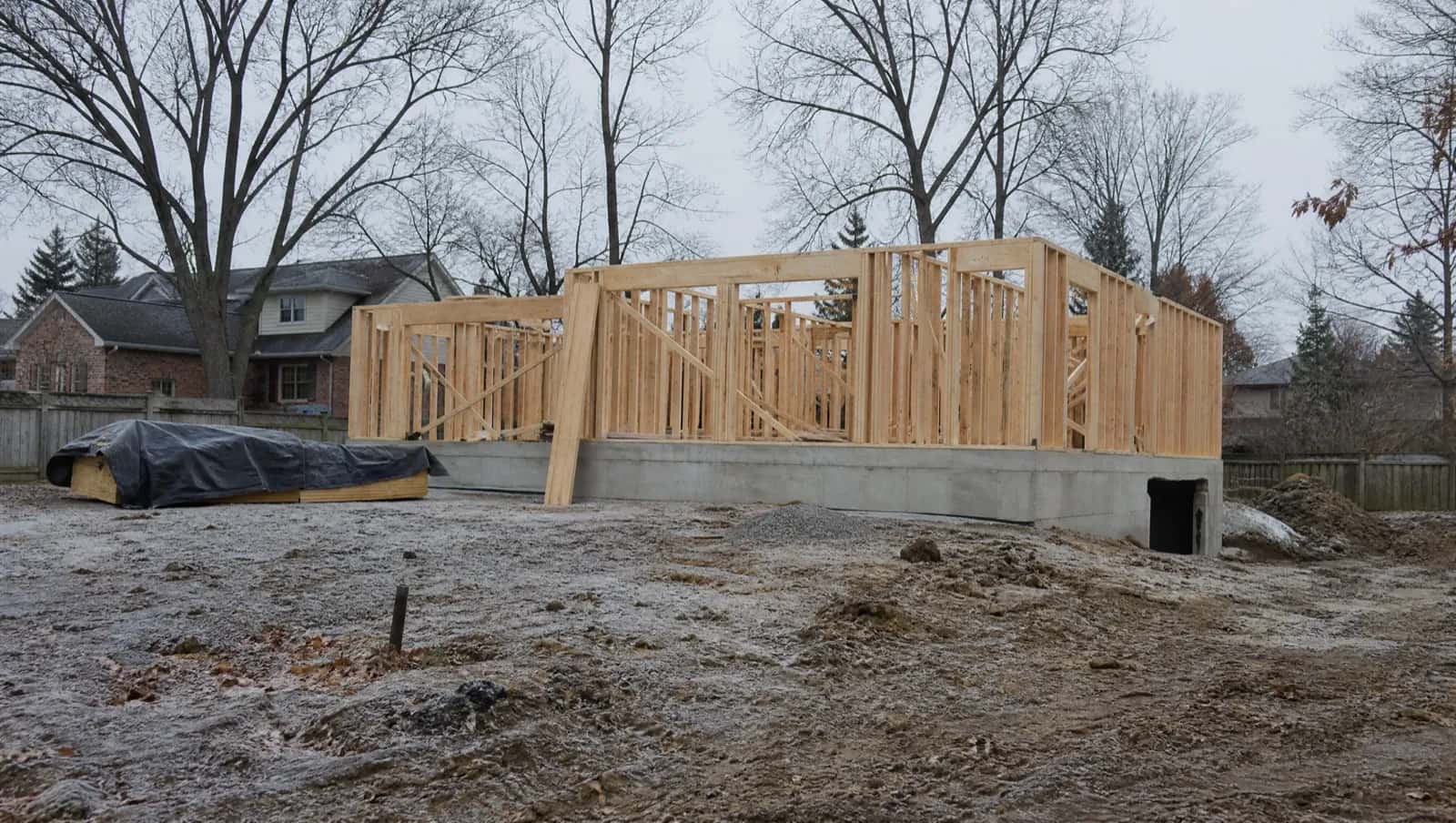
Winter does not stop construction. It stops specific operations, and those operations happen to sit at the beginning of the sequence. Once a unit is closed in and heated, interior work continues through the cold months without much penalty. The bottleneck is everything before that point.
- Excavation to 1.2 m through frozen ground is slower, and frozen spoil is harder to handle and remove.
- Concrete placement in cold weather needs heating, hoarding and blankets, which is a real cost line rather than a rounding error.
- Servicing trenches across a yard are the operation most affected, since frozen ground and a long run compound each other.
- Site access degrades. A narrow side passage that works in September becomes a mud or ice problem in March.
- Landscaping restoration and final grading cannot be completed until the ground reopens, which can hold a final inspection.
This is why a garden suite is more season sensitive than a basement suite. The basement suite works inside an existing heated envelope, so its schedule barely notices February. A detached unit has to get its foundation, services and shell done in the open.
Working the permit calendar backwards
Here is the arithmetic that decides your start date. Permit review across GTA municipalities runs four to eight weeks. Design, survey and any conservation authority clearance sit ahead of that. Construction itself is four to eight months, and the honest end to end range including approvals is eight to fourteen months.
Read backwards from an April start, that means:
- Feasibility and siting study in the preceding late summer, which establishes what the lot permits before design money is spent.
- Design and permit drawings through the autumn.
- Permit submission in late autumn, so review runs over the winter when nothing could be poured anyway.
- Conservation authority clearance in parallel where the lot is in a regulated area, since this is the step most likely to slip.
- Mobilise as soon as the ground opens, with the permit already in hand.
Owners who start the conversation in March are usually looking at a start after the following winter, not this one. That is not a scheduling preference, it is the permit queue plus the season. The one genuine advantage of a winter conversation is that it costs nothing to have, and the feasibility work that follows is desk work that proceeds regardless of weather.
The northern GTA case
In Caledon, King, Uxbridge and Brock the compression is sharper, and there is usually a second factor. These are the municipalities where septic permits enter the picture on unserviced lots, which adds an approval with its own timeline on top of a season that is already two months shorter. A missed spring start in Brock is a full year, not a few weeks.
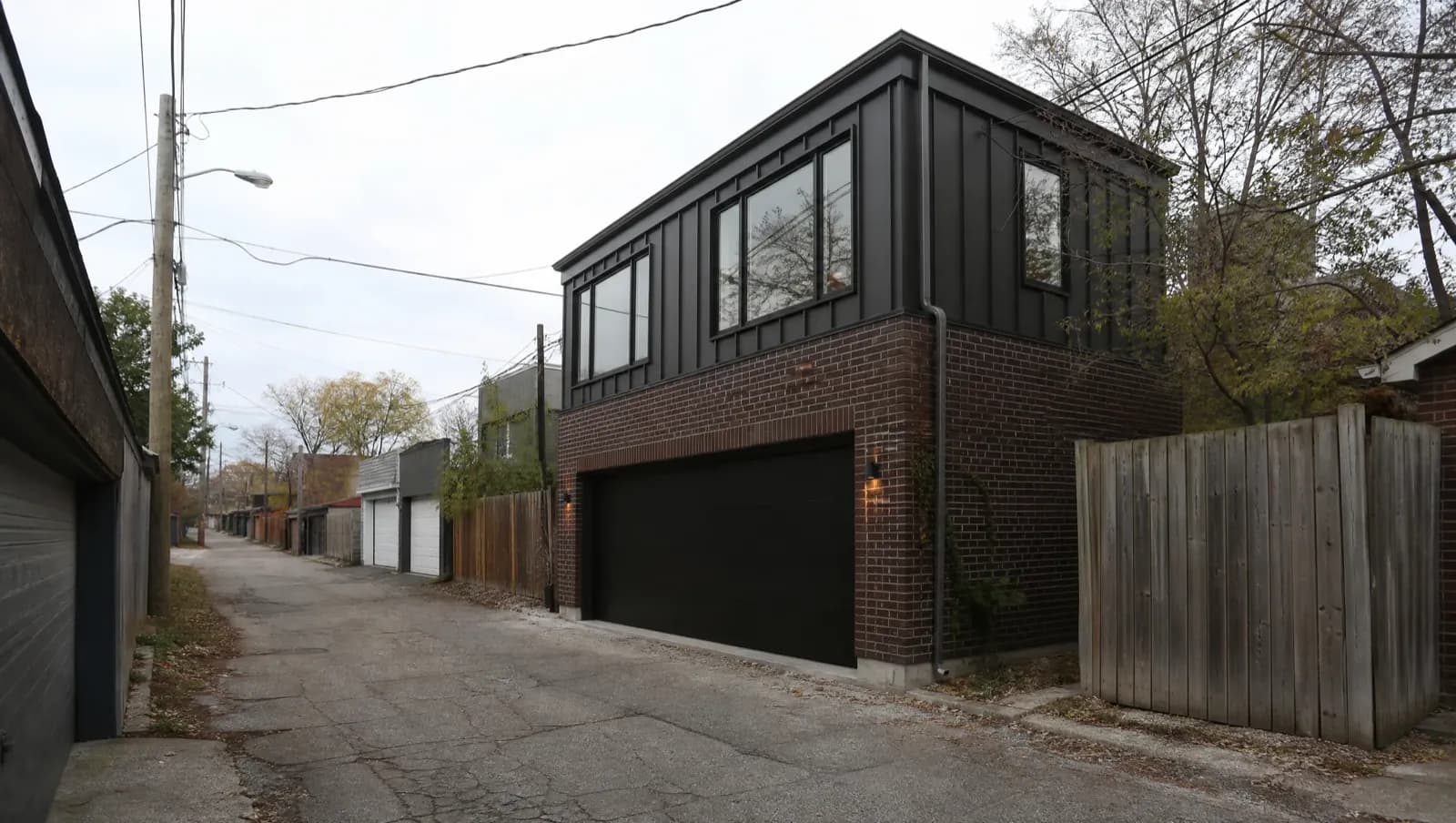
We plan those projects on a different rhythm as a result. Feasibility happens earlier, the septic approval is opened as its own workstream rather than folded into the permit package, and mobilisation is scheduled tight against the ground opening. Where a detached form will not fit the calendar, a garage conversion often will, since much of the envelope already exists.
Frequently asked questions
Can you build an ADU in winter at all?
Yes, and we do. What changes is cost and sequence rather than possibility. Cold weather concrete work needs heating and hoarding, excavation through frozen ground is slower, and both carry real cost. If a unit is closed in before the cold arrives, the interior phase runs through winter with very little penalty.
Why is frost depth the same everywhere in the GTA?
Frost depth is a design value used to set minimum foundation depth so footings sit below the line where ground freezing causes movement. Across this region that value is 1.2 m, which is why the foundation spec does not change between a Toronto lot and a Georgina lot. Snowfall and winter temperature vary considerably more than the frost line does.
Does a shorter season make northern municipalities more expensive?
Not through the fee schedule, but it does raise the risk of a missed season, and a missed season is the expensive outcome. It also correlates with septic permits on unserviced lots, which add both cost and an approval step. We flag both during feasibility rather than at contract.
When should I start the conversation for a spring start?
The previous summer is comfortable, the previous autumn is workable, and the same spring is usually too late for that year. Feasibility and design are the parts that can run in any weather, so using the winter for them is simply efficient. It also means the permit is reviewed during the months when nothing could be built regardless.
Marc Thibault
Construction Manager
Marc Thibault writes about adu builders and related topics for GTA ADU Builders.
This article was AI-assisted and reviewed by Adam Reilly. Regulations, fees and dates were checked against the sources named in the text before publication.